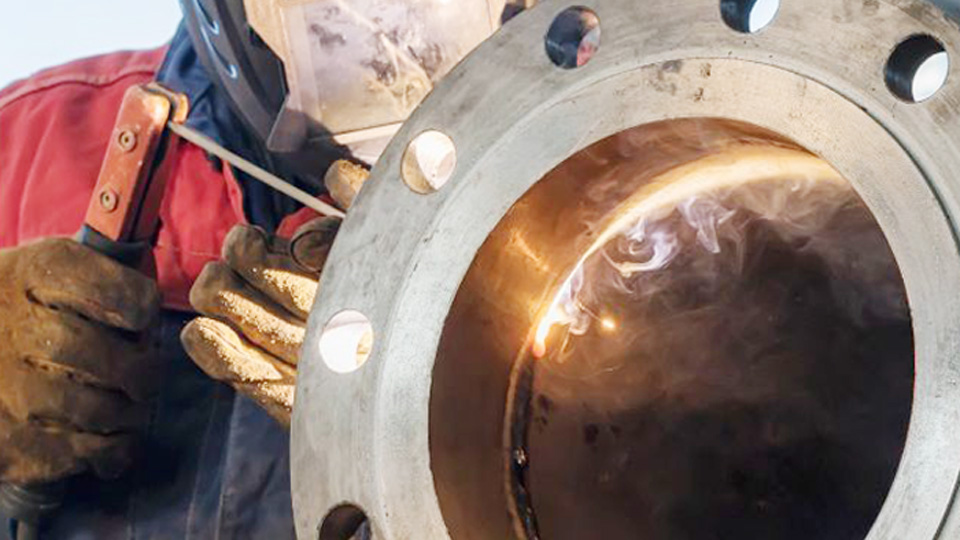
One of the first joints I learned to weld in the shop was the butt joint, and at the time I didn’t realize how much it would matter in real-world fabrication. MIG on mild steel, TIG on stainless, stick welding thicker plate with filler rods, the butt joint shows up everywhere, from pipe welding to sheet metal work. The challenge most beginners face is figuring out why and when to use a butt joint, especially with different metal thicknesses, edge prep, and arc control.
Done right, it gives you strong, clean welds with full penetration. But if the joint prep is sloppy or the heat input isn’t balanced, you’ll end up with weak fusion or excessive distortion. Understanding what a butt joint is used for can save time, reduce rework, and make a huge difference in safety and structural strength. I’ll break down exactly why this simple joint is so useful and how to make it work for you in the shop or out in the field.
Quick Answer
A butt joint is used to join two pieces of metal end-to-end in the same plane. It is the go-to weld joint for structural continuity, pipe runs, tank seams, and frame extensions. Butt joints are efficient because they use less filler metal, produce flush surfaces, and deliver full cross-section strength when prepped and welded correctly. The groove type you choose (square, V, bevel, J, or U) depends on the material thickness, and proper edge preparation is the single biggest factor separating a strong butt weld from a weak one.
Image by yeswelder
Basics of Butt Joints in Welding
A butt joint is two flat edges meeting head-on, welded to become one continuous piece. Think of it like a handshake, direct contact, no overlap. In welding terms, it’s a groove weld where filler metal fills the gap between those edges, creating full penetration for maximum hold.
What sets it apart from a lap or tee? No overlap means less distortion risk, but it demands precise alignment. I’ve seen hobbyists jump straight in without a level, ending up with a wavy seam that looks like it was welded on a rollercoaster. The key is all about the faying surfaces, the mating edges where the metal meets. Clean them right, and your weld has backbone. Leave mill scale or oil, and it’s weak from the start.
In my early days fabricating trailer hitches, I learned the hard way that butt joints shine in straight-line applications. They’re not for every corner, but when you need efficiency, they’re gold. And safety-wise, following AWS D1.1 codes keeps things legit. Proper prep means no hydrogen cracks sneaking up on you later.
When and Why to Choose a Butt Joint Over Other Welds
Ever wonder why not every joint is a fillet or lap? It boils down to your project’s demands. Use a butt joint when you’re joining plates or pipes end-to-end for structural continuity, like extending a beam or sealing a tank. It’s ideal for load-bearing spots where you want full cross-section strength without extra weight.
Why pick it? Cost efficiency, for one. Less metal to weld means shorter run times and lower filler use. In a pro shop, that adds up fast. For DIYers building a gate from scrap I-beam, it’s forgiving on basic setups. But here’s the real talk: it’s not the best choice for high-stress bends. I’ve switched to laps there to spread the load.
Material compatibility plays a big role too. Butt joints work great on carbon steels, but with aluminum, watch for oxide layers. They’ll sabotage fusion if you don’t clean them off. A solid butt joint means no weak points for fatigue under vibration, like in truck frames. If your design calls for inline strength and clean lines, butt it up.
Types of Butt Joints and Which One Fits Your Project
Butt joints aren’t one-size-fits-all. The type you pick depends on thickness, access, and strength needs. I’ve sketched these on shop napkins more times than I can count.
Square Butt Joints for Thin Materials
Start here if you’re working with metal under 1/4-inch thick. No groove prep needed, just square edges butted tight with a tiny root gap, maybe 1/16-inch. Run a single pass for full penetration. I use these for sheet metal patches on trailers. They’re quick and clean with MIG at about 18 volts and 150 IPM wire speed.
Pros: Minimal prep, fast execution. Cons: You’ll get burn-through on really thin stuff if your heat’s too hot. Tack opposite sides to pull the joint straight.
Products Worth Considering
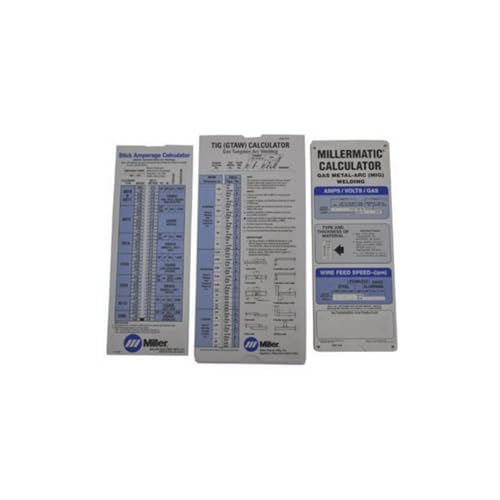
Comprehensive 3‑in‑1 reference pack covers MIG, TIG and Stick welding parameters—ideal for welders who work across multiple processes
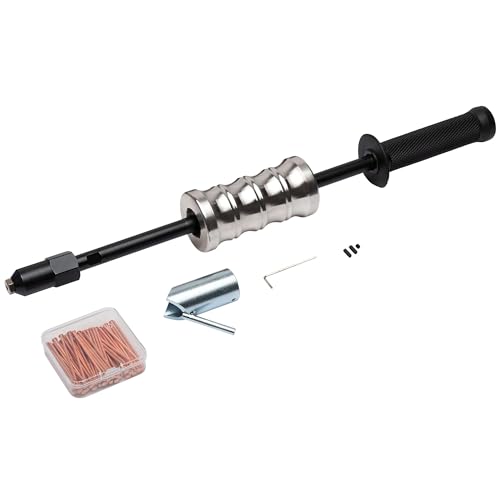
Converts MIG Welder to Stud Welder: Allows your existing MIG welder to perform stud welding for dent repair.

Includes 2 pre-cut steel sheets that detach into 24 parts—weld them to build 2 hollow cubes and 2 dice.
V-Groove Butt Joints for Medium Thickness
Once you hit 1/4 to 3/4-inch, bevel those edges to a 60-degree included angle. Filler flows into the groove and builds up in layers for deep fusion. This is common in structural fab, think I-beams and columns.
I’ve burned through a few learning curves here. Set your angle too shallow, and slag traps form. A good starting point is a 30-degree bevel per side to hit that 60-degree included angle. For AWS compliance, aim for 100% penetration.
Products Worth Considering

Product Introduction: E6013 welding rod is suitable for both AC and DC applications and can be used for all position welding
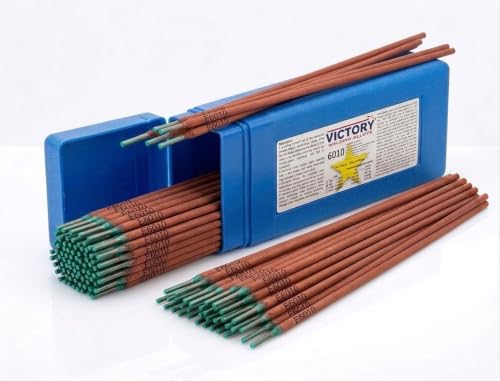
A strong forceful arc of this electrode creates deeply penetrating welds, while the fast freeze characteristic allows it to be used in any position including vertical-up, vertical-down, overhead, and flat or horizontal

NO SOLDER POWDER NEEDED: These aluminum rods are flux cored welding rods, no need solder powder, no other materials are required, and it is easy to use.
Bevel and J-Groove for One-Sided Access
Tight spots? Use a single bevel on thicker stock, or a J-groove for that curved edge prep. These are great for pipe runs where you can’t flip the work.
On a refinery shutdown, J-grooves saved my bacon. I welded overhead without flipping 12-inch pipe. Settings: TIG at 120 amps, 15 CFH argon. One mistake to avoid: forgetting a backing bar, which leads to root concavity.
U-Groove for Heavy-Duty Work
Over 3/4-inch? U-shape grooves concentrate heat and require less filler metal. They’re my go-to for pressure vessels because of smoother stress flow through the weld.
Parallel sides at the root help cut distortion. The tradeoff is more grinding after the weld is done.
| Groove Type | Material Thickness | Prep Time | Strength Level | Best For |
|---|---|---|---|---|
| Square | <1/4″ | Low | Good | Sheet metal, quick repairs |
| V-Groove | 1/4″-3/4″ | Medium | Excellent | Structural beams, frames |
| Single Bevel/J | 1/2″-1″ | Medium | Very Good | Pipes, one-sided access |
| U-Groove | >3/4″ | High | Superior | Heavy fab, vessels |
This table has saved me hours debating setups. Pick based on your machine’s sweet spot and the code requirements for your project.
Preparing Your Butt Joint: The Prep Work That Makes or Breaks It
Prep is where pros separate from amateurs. I’ve redone welds because of lazy edges, and you don’t want to be in that spot. Start with clean metal: wire brush or grind to bright, no oils or contaminants. Measure your root gap. A 2-3mm gap is my rule for most arc processes. Too tight and you won’t get penetration. Too wide and you’ll waste filler.
Tack welds next: three or four, spaced evenly, about 1-inch long. Hammer them flat if they’re proud. For thicker stock, pre-heat to 150°F on carbon steel to dodge cracks. Grab a temp stick to verify.
Edge prep tools? An angle grinder with a flap disc works for V-grooves. Plasma is good for rough cuts. In the shop, we plasma square, then bevel. Safety first: gloves, chipping hammer ready, and eye protection. Sparks fly wild during grinding.
If alignment shifts, use clamps or dogs to hold things in place. Once, on a windy site, my clamps slipped and I wedged wedges into the gap. It works every time.
Choosing the Right Welding Process for Butt Joints
Your machine dictates a lot, but matching the process to the joint type matters just as much. Here’s the rundown from my years in the shop.
MIG Welding Butt Joints: Fast and Forgiving
Short circuit or spray transfer, MIG is king for shop fab. For 1/4-inch plate, try 0.035 ER70S-6 wire with 75/25 shielding gas at 20-22 volts and about 200 IPM. Use a 10-15° push angle.
Why MIG? Less spatter than stick, and it’s great for long seams. One common mistake is dipping the wire too deep. Crank the voltage up a bit if that happens. I’ve MIG’d miles of trailer frames and it’s hard to beat for speed.
TIG Welding for Precision Butt Joints
TIG is my precision pick. Use AC for aluminum butts and DCEN for steel. A 1/16″ tungsten electrode with 15-20 CFH argon works well. Set amps around 100 for 1/8″ stock.
Pros: Excellent control over heat input and beautiful beads. Cons: It’s slower. Use the foot pedal to control puddle size. I taught a student TIG who overheated his first pass. Dialing back 10 amps and practicing on scrap fixed it right away.
Stick Welding Butt Joints: The Old-School Reliable
SMAW with E7018 rods is the outdoor workhorse. Use a 1/8″ rod at 90-110 amps with a drag technique. Stick handles dirty steel better than MIG or TIG.
Getting porosity? Dry your rods at 250°F in a rod oven. I’ve done field repairs in the rain, using 6010 for the root pass and 7018 for fill and cap.
Other Processes: When to Go Beyond Arc
Resistance welding works for sheets, and laser welding is used in aerospace, though those are rare in most U.S. shops. Submerged arc welding handles heavy U-grooves well, and the auto-feed saves your back on long runs.
Always pick your process based on the governing code. ASME Section IX requires documented parameters for procedure qualification.
Step-by-Step Guide to Welding a Perfect Butt Joint
Alright, gloves on. This MIG example scales to other processes too.
- Prep the Edges: Grind square or bevel to spec. Clean with acetone. Set root gap to 1/8″.
- Tack It Up: Three tacks, spaced 180° apart. Check square with a level.
- Set Your Machine: MIG: 20V, 180 IPM, 18 CFH gas. Make sure your ground clamp is secure.
- Strike and Run: Start at the tack end, weave slightly for V-grooves. Keep a steady travel speed and a 1/2″ puddle. Backstep if needed.
- Multi-Pass if Thick: Clean slag between passes, feather your starts. Run the last pass hot for good tie-in.
- Cool and Inspect: Air arc any defects, grind flush. Do a visual test (VT) for cracks and ultrasonic testing (UT) for penetration.
It took me a summer of scrapped plates to nail multi-pass welding. A mirror for root inspection can save you from needing X-rays.
For TIG: Same prep, but use pulse mode if your machine has it. Pulsing reduces overall heat input and helps control the weld pool.
Common Mistakes in Butt Joint Welding and How to Fix Them
We’ve all got war stories. Incomplete fusion? Usually from too low amps or too fast travel. Slow down and bump heat by 10%. Porosity? Moisture in the flux is the usual suspect. Bake your rods and make sure your shielding gas is dry.
Cracking happens when you skip pre-heat on high-carbon steel. Hit 200°F next time. Distortion? Alternate welding sides and clamp firmly.
My first big job, I warped a tank end plate. Clamped it down and back-stepped the sequence, and it came out flat. That lesson stuck: weld sequence matters more than most people think.
Burn-through on thin stock? Shorten the arc length and switch to a thinner wire. A backing strip also helps support the root.
Visual check: If the bead is convex, grind it down. Undercut? Fill it with a butter pass at lower heat.
Pros and Cons of Using Butt Joints in Your Welds
| Pros | Cons |
|---|---|
| High strength with full penetration | Prep time for thick stock |
| Material efficient, less waste | Sensitive to misalignment |
| Clean look, easy to grind flush | Fixturing needed for long runs |
| Versatile across all welding processes | Higher defect risk if root gap is wrong |
Weigh these per job. Butt joints are worth it for piping and structural work. For quick bracket attachments, a lap joint may be faster.
Real-World Applications of Butt Joints in Welding
From my pipeline days to hobby builds, butt joints are everywhere. In piping, they create seamless runs and girth welds for flanges. API 1104 is the governing standard for pipeline welding.
Structural steel uses them heavily. Bridge girders follow AWS D1.5 codes. In automotive, you’ll find butt joints in frame extensions and exhaust system connections.
Aerospace relies on thin titanium butt joints with NADCAP certification. In my own shop, I’ve used square butts on 10-gauge trailer tongues. DIY gate posts? Simple, strong, and a real cost saver since one butt joint replaces two laps.
In energy, wind tower sections use U-groove butt joints for the massive girth welds that hold each section together.
Inspection and Testing of Butt Joint Welds
A great-looking bead doesn’t always mean a sound weld underneath. That’s why inspection matters. Visual testing (VT) is the first line of defense. You’re checking for surface cracks, undercut, porosity, and bead profile. Use a fillet gauge or ruler to verify weld size.
For critical work, non-destructive testing (NDT) goes deeper. Radiographic testing (RT) uses X-rays to reveal internal defects like lack of fusion or slag inclusions. Ultrasonic testing (UT) sends sound waves through the weld to detect voids. Magnetic particle testing (MT) picks up surface and near-surface cracks on ferromagnetic metals.
Which test you need depends on the code. AWS D1.1 and ASME Section IX each have their own acceptance criteria. On pipeline jobs under API 1104, radiographic or ultrasonic testing of butt welds is standard practice. Knowing what test applies before you weld helps you set up the joint right the first time.
Advanced Tips for Butt Joint Success on the Job Site
Dial in your variables: travel speed of 8-12 IPM, work angle of 10-15°. For aluminum, clean with a stainless steel brush only, never a carbon steel one.
Match your filler to the base metal. ER308L is the correct choice for 304 stainless butt joints. Safety matters too: use a fume hood, wear leather sleeves, and take metal fume exposure seriously.
On one site weld, the wind blew my shielding gas away. I taped a makeshift shield and ran it anyway, but portable baffles are a much better solution.
For students: practice 10 coupons daily. For pros: log your parameters in a notebook. Tracking what works on specific joints and materials will make you faster and more consistent over time.
Conclusion
Prep like your paycheck depends on it (it does), match your method to the metal, and always inspect. You’re now geared to tackle inline seams that hold up under real stress, whether it’s a backyard project or a mill cert job. Always back-purge with argon on stainless butt joints to protect the root from oxidation. Grab some scrap, set up, and run a bead. You’ve got this.
FAQs
What Materials Work Best for Butt Joints?
Most metals work well. Carbon steel is the easiest to butt weld. Aluminum needs oxide removal before welding, and stainless steel is a great choice for corrosion-prone spots. Always match the filler metal to the base metal for the best results.
How Do I Avoid Distortion in Butt Welds?
Clamp tight, weld alternating sides, and use low heat input. Pre-bending the pieces before welding also helps. I’ve straightened many a warped plate using these methods.
What’s the Difference Between Full and Partial Penetration Butt Joints?
Full penetration goes root-to-face for maximum strength. Partial penetration only fuses partway through the joint and is fine for non-structural applications. Most welding codes require full penetration for critical, load-bearing work.
Can Beginners Weld Butt Joints?
Yes. Start with a square butt on thin stock using MIG. Practice your alignment on scrap metal, and it’ll click fast.
How Thick Can You Go with a Butt Joint?
Up to several inches with U-grooves and multi-pass welding. Beyond that, processes like electroslag welding are used, but those are for large-scale shop operations.