

One of the biggest lessons I picked up early in my welding journey was how challenging stainless steel can be when setting up a Miller TIG welder. Too much heat and the metal distorts or loses its corrosion resistance; too little and the weld lacks penetration, leaving weak spots that just don’t hold up. I remember struggling to balance amperage, arc control, and the right filler rods for different metal thicknesses, only to realize later that joint prep and shielding gas flow were just as critical.
These are the same questions I hear from many welders: “Should I run pulse or steady current?” or “How much gas is enough to keep the weld clean?” Getting the Miller TIG welder settings for stainless steel dialed in isn’t just about fine-tuning buttons—it’s about producing strong, clean, and cost-efficient welds that hold up in real-world use. In this guide, I’ll share the battle-tested settings and tips that helped me turn frustration into consistent results.
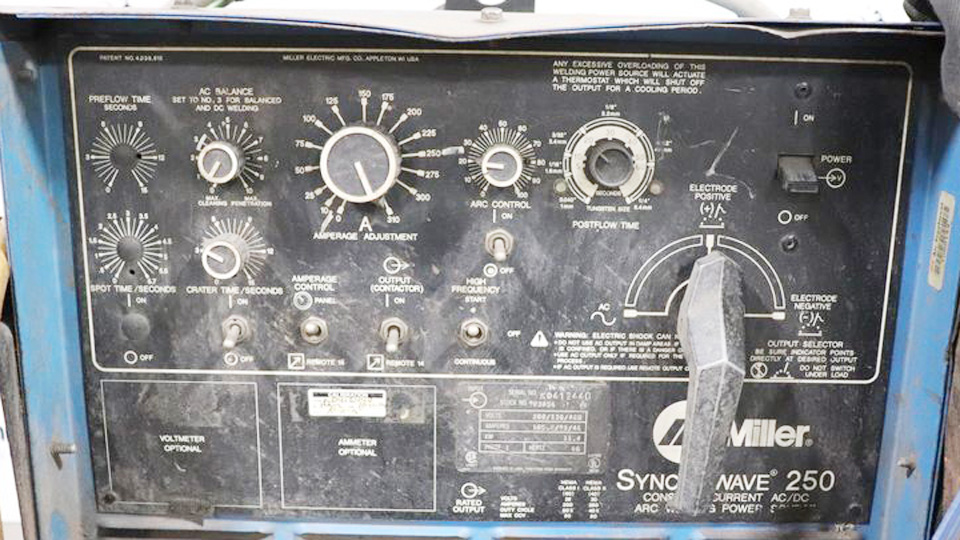
Image by theequipmenthub
## Why Stainless Steel TIG Welding Is Unique
Stainless steel is a beast to weld compared to mild steel or aluminum. It conducts heat poorly, so it traps heat in the weld zone, making it prone to warping or burn-through, especially on thin material. It’s also sensitive to contamination, which can lead to ugly, porous welds.
TIG welding, or Gas Tungsten Arc Welding (GTAW), is perfect for stainless because it offers precise control over the arc and heat input. Miller welders, like the Dynasty or Syncrowave series, are industry favorites for their reliability and advanced features like AC/DC switching, pulse settings, and adjustable balance control.
Getting the settings right on your Miller TIG welder is about balancing heat, shielding gas, and technique to achieve a weld that’s strong, clean, and up to code (like AWS D1.6:2017 for stainless steel). I’ve botched plenty of welds in my early days—too much heat, wrong gas flow, you name it. This guide will help you avoid those mistakes and dial in your Miller like a pro.
## Understanding Your Miller TIG Welder’s Controls
Miller TIG welders, whether it’s a Syncrowave 210 for the hobbyist or a Dynasty 400 for industrial work, come with controls that let you fine-tune your weld. Key settings for stainless steel include:
- Amperage: Controls heat input. Too high, and you burn through; too low, and the weld won’t penetrate.
- Polarity: DCEN (Direct Current Electrode Negative) is standard for stainless.
- Shielding Gas Flow: Protects the weld pool from contamination.
- Pulse Settings: Reduces heat input for thin material.
- Post-Flow: Keeps gas flowing after the arc stops to protect the tungsten and weld.
Before we get to the settings chart, let’s break down each component and how to tweak it for stainless steel.
## Choosing the Right Tungsten for Stainless Steel
The tungsten electrode is your welder’s spark plug—it carries the arc that melts the metal. For stainless steel, I swear by 2% Lanthanated (blue) or 2% Ceriated (grey) tungsten. They’re versatile, handle DCEN well, and maintain a sharp tip for a stable arc. Avoid pure tungsten (green) or thoriated (red) for stainless—pure is better for aluminum, and thoriated, while good for DC, has mild radioactivity concerns, so ventilate well.
Tungsten Size: Match it to your amperage. For example:
- 1/16″ (1.6mm) for 30–100 amps.
- 3/32″ (2.4mm) for 100–200 amps.
- 1/8″ (3.2mm) for 200–300 amps.
Pro Tip: Sharpen the tungsten to a point for DCEN welding on stainless. I use a bench grinder with a fine wheel and aim for a 20–30° taper. A dull or contaminated tungsten will make your arc wander, and trust me, that’s a headache you don’t need.
Mistake I Made: Early on, I used a balled tungsten on stainless, and the arc danced around like it had a mind of its own. Sharpening fixed it instantly.
## Miller TIG Welder Settings Chart for Stainless Steel
Here’s a practical settings chart for welding stainless steel with a Miller TIG welder, based on common material thicknesses and typical shop conditions. These are starting points—adjust based on your machine and joint type.
| Thickness (mm) | Amperage (A) | Tungsten Size (mm) | Filler Rod (mm) | Gas Flow (LPM) | Pulse (Hz) | Polarity |
|---|---|---|---|---|---|---|
| 0.8–1.0 | 25–50 | 1.6 | 1.6 | 8–10 | 0.7–2 | DCEN |
| 1.5–2.0 | 50–80 | 1.6–2.0 | 1.6–2.0 | 8–12 | 0.7–1.5 | DCEN |
| 3.0–4.0 | 80–120 | 2.4 | 2.0–2.4 | 10–12 | Optional | DCEN |
| 5.0–6.0 | 120–180 | 2.4–3.2 | 2.4–3.2 | 12–15 | Optional | DCEN |
How to Use It: Start with these settings, then fine-tune using your Miller’s foot pedal or thumb control. For example, on a 2mm stainless pipe, I’d start at 60 amps, 1.6mm tungsten, and 10 LPM gas flow, then adjust based on the weld pool’s behavior.
My Experience: I once welded 1mm stainless for a custom exhaust with too much amperage (70A instead of 50A). The piece warped, and I had to start over. Now, I always test on scrap first.
## Shielding Gas for Stainless Steel
Argon is the go-to shielding gas for TIG welding stainless steel. It’s affordable, stable, and provides excellent coverage. In rare cases, like thick stainless or high-speed production, a 90% argon/10% helium mix can improve penetration, but for most jobs, pure argon does the trick.
Flow Rate: Set your Miller’s regulator to 8–12 LPM (approximately 17–25 CFH) for indoor welding. If you’re in a drafty shop or outdoors, bump it to 12–15 LPM to keep the weld pool protected. Too little gas leads to porosity; too much wastes your tank and can create turbulence that draws in contaminants.
Safety Note: Check your gas lines for leaks. I had a loose fitting once, and my welds turned out porous because the gas wasn’t reaching the torch. A quick soap-and-water test on connections saved me from repeating that mistake.
Mistake to Avoid: Running out of gas mid-weld. I did this on a critical job, and the weld turned black from oxidation. Now, I always check my tank pressure before starting.
## Polarity and Pulse Settings on Miller Welders
For stainless steel, always use DCEN polarity on your Miller TIG welder. This focuses most of the heat on the workpiece, keeping the tungsten cool and the arc stable. AC is for aluminum, not stainless—using it will give you a messy, unstable arc.
Pulse Settings: If your Miller (like a Dynasty 200 or 350) has pulse capability, use it for thin stainless (0.8–2mm). Pulsing alternates between high and low current, reducing heat input to prevent warping. Try these starting points:
- Pulse Frequency: 0.7–2 Hz.
- Pulse Duration: 50–60% (time on peak current).
- Background Current: 20–50% of peak amperage.
When to Use Pulse: I used pulse welding to repair a 1mm stainless brewery tank. It kept the heat low, preventing distortion on the thin material. Without pulse, I’d have been in trouble.
Tip: If your Miller has adjustable post-flow, set it to 8–12 seconds to protect the tungsten and weld as they cool.
## Filler Rod Selection for Stainless Steel
Choosing the right filler rod is critical for strong, clean welds. For stainless steel, match the rod to the alloy you’re welding. Common choices conforming to AWS A5.9 specifications:
- ER308L: For 304/304L stainless, the most common alloy in shops.
- ER316L: For 316/316L stainless, used in marine or chemical applications.
- ER309L: For welding dissimilar metals (e.g., stainless to mild steel).
Rod Size: Match the rod to the material thickness. For 1mm stainless, use a 1.6mm rod; for 3–4mm, go with 2.0–2.4mm.
My Mistake: I once used an ER308L rod on 316 stainless, thinking it’d be fine. The weld held, but it didn’t meet the corrosion resistance needed for a marine job. Always double-check your alloy and rod match.
## Joint Preparation for Stainless Steel
Stainless steel is unforgiving when it comes to contamination. Dirt, oil, or even fingerprints can cause porosity or weak welds. Here’s how I prep my joints:
- Clean the Metal: Use a stainless steel wire brush (dedicated to stainless to avoid cross-contamination) and acetone to remove oils.
- Grind Bevels: For thicker material (3mm+), grind a 30–45° bevel on butt joints to ensure good penetration.
- Fit-Up: Ensure tight, gap-free joints. Stainless doesn’t tolerate sloppy fit-up.
Mistake to Avoid: Skimping on cleaning. I rushed a job once, and tiny bits of grease left porous welds that failed a pressure test. Now, I clean like my life depends on it.
## Step-by-Step Guide to Setting Up Your Miller TIG Welder
Let’s walk through setting up a Miller TIG welder (like a Syncrowave or Dynasty) for welding 2mm 304 stainless steel:
- Select Tungsten: 2% Lanthanated, 1.6mm, sharpened to a 20° point.
- Set Polarity: DCEN.
- Adjust Amperage: Start at 50–70 amps, use the foot pedal for fine control.
- Set Gas Flow: 8–12 LPM of pure argon.
- Choose Filler Rod: 1.6–2.0mm ER308L.
- Prep the Joint: Brush with a stainless wire brush, wipe with acetone.
- Set Pulse (if available): 1 Hz, 50% duration, 30% background current.
- Test Weld: Run a bead on scrap stainless to check arc stability and puddle control.
- Weld: Hold a 15–20° torch angle, feed filler rod steadily, and control heat with the pedal.
Tip: Keep your torch steady and move at a consistent speed. I find it helps to brace my hand on the workpiece for stability.
## Pros and Cons of TIG Welding Stainless Steel with Miller Welders
Pros:
- Precision: Miller welders offer fine control for clean, aesthetic welds.
- Versatility: Handles various stainless alloys and thicknesses.
- Reliability: Miller’s build quality means consistent performance.
- Advanced Features: Pulse, balance control, and post-flow make complex jobs easier.
Cons:
- Learning Curve: TIG welding stainless requires practice to master.
- Cost: Miller welders are pricier than some brands, though worth it for pros.
- Time-Intensive: TIG is slower than MIG, so it’s not ideal for high-volume production.
## Common Mistakes and How to Fix Them
I’ve made my share of mistakes welding stainless. Here’s how to avoid them:
- Porosity: Caused by dirty metal or low gas flow. Clean thoroughly and increase gas to 10–12 LPM.
- Warping: Too much heat on thin stainless. Use pulse or lower amperage (e.g., 40A for 1mm).
- Tungsten Contamination: Dipping the tungsten in the weld pool. Regrind the tip and practice torch control.
- Inconsistent Beads: Uneven travel speed or filler rod feeding. Practice a steady rhythm—think of it like playing a slow song.
- Sugaring (Back-Side Oxidation): Not purging the back of the weld (common in pipes). Use argon purge gas for critical jobs.
My Story: I warped a 1mm stainless sheet because I didn’t use pulse and cranked the amps too high. Switching to pulse and dropping to 40A saved the next piece.
## Safety Considerations for TIG Welding Stainless
Safety is non-negotiable. Stainless steel welding produces UV radiation and fumes containing chromium and nickel that can be hazardous, per OSHA standards 1910.252 and 1910.353:
- Helmet: Use an auto-darkening helmet with shade 8–10 for TIG (per OSHA 1910.133 eye protection requirements).
- Gloves and Clothing: Wear flame-resistant gloves and a jacket to protect from burns.
- Ventilation: Stainless fumes (especially from chromium and nickel) can be toxic. Use a local exhaust ventilation (LEV) system or work in a well-ventilated area, as required by OSHA 1910.353.
- Grounding: Ensure your workpiece is properly grounded to avoid shocks.
- Gas Safety: Check for argon leaks and avoid welding in confined spaces where gas can pool.
I got complacent once and welded stainless without a respirator. The headache from fumes taught me to never skip ventilation again.
## Real-World Applications for Stainless Steel TIG Welding
Miller TIG welders shine in stainless steel projects like:
- Food and Beverage: Welding 304/316 stainless for tanks or piping that must meet sanitary standards.
- Automotive: Custom exhausts or turbo manifolds.
- Marine: Corrosion-resistant welds for boats or docks.
- Fabrication: Sculptures, furniture, or architectural features.
Each job needs specific settings. For example, a 1mm stainless exhaust might use 40–50A with pulse, while a 4mm tank weld needs 100–120A without pulse.
## Conclusion: Weld Stainless Like a Pro with Your Miller
You’re now equipped to dial in your Miller TIG welder settings for stainless steel with confidence. From picking the right tungsten to setting amperage, gas flow, and pulse, you’ve got the know-how to produce strong, clean welds that meet industry standards or impress your clients. Whether you’re a DIYer tackling a weekend project, a student learning the craft, or a pro on a high-stakes job, these settings will help you avoid costly mistakes and get results you’re proud of. Take your time, practice on scrap, and trust your Miller to deliver.
Pro Tip: Save your best settings in your Miller’s memory (if available) or jot them down in a shop notebook. It’s a lifesaver when you’re switching between materials or thicknesses.
## FAQ ### What’s the best tungsten for TIG welding stainless steel on a Miller welder?
Use 2% Lanthanated (blue) or 2% Ceriated (grey) for stainless steel on DCEN. They’re stable, versatile, and hold a sharp point for precise arcs. Sharpen to a 20–30° taper for best results.
### How do I prevent warping when welding thin stainless steel?
Use pulse settings (0.7–2 Hz, 50% duration) and low amperage (25–50A for 1mm). Move quickly, and test on scrap to avoid overheating. A chill block or copper backing can also absorb excess heat.
### What gas should I use for stainless steel TIG welding?
Pure argon is ideal, with a flow rate of 8–12 LPM (17–25 CFH) indoors or 12–15 LPM in drafty conditions. Check for gas leaks and ensure your tank has enough pressure before starting.
### Why are my stainless welds porous?
Porosity comes from dirty metal or insufficient gas flow. Clean the joint with a stainless brush and acetone, and ensure gas flow is 8–12 LPM. Check for leaks in your Miller’s gas line.
### Can I weld stainless steel without filler rod?
Yes, for thin material (1mm or less), you can fusion weld without filler if the fit-up is tight. For thicker stainless or stronger welds, use a matching filler rod like ER308L for 304 stainless conforming to AWS A5.9 specifications.




[…] New to process selection? Compare methods in MIG vs TIG and see stainless setup in Miller TIG settings for stainless. […]